thesaurós artists

February 2024 // Events and ceremony for the Brecht Birthday

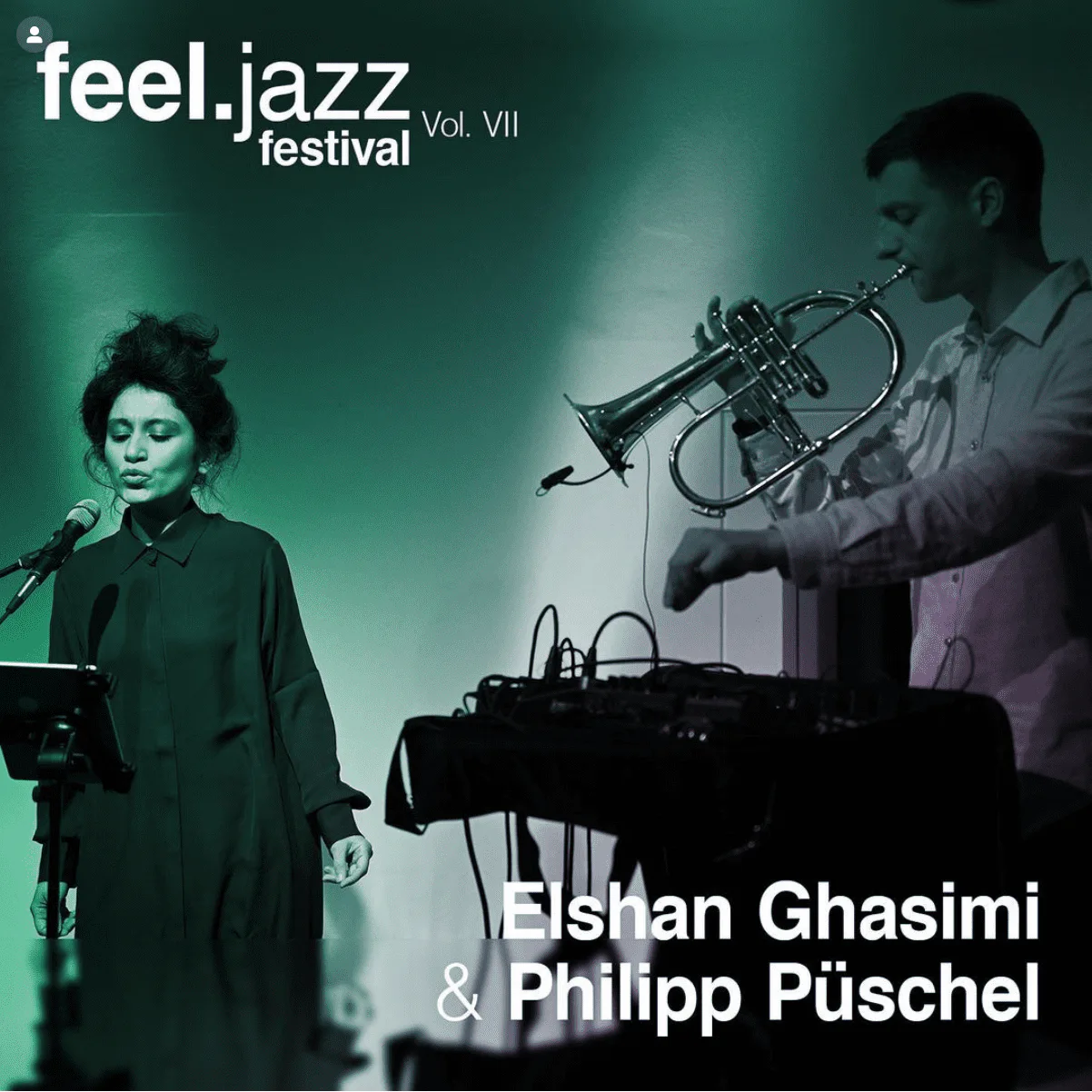
feel.jazz festival Vol. VII: Elshan Ghasimi at the microphone and Philipp Püschel with a flugelhorn in green light

© 2024 feel.jazz festival

Dear readers,

In a year that is no longer young but certainly not yet old, we wish you all the best: spirit, strong nerves, and peace of mind.

On Saturday, 3 February, tar master and composer Elshan Ghasimi will present her new program for the first time with jazz trumpeter and electronic musician Philipp Püschel at the feel.jazz festival at the Hafenklang in Hamburg.

Tickets and more about the festival, which starts on 2 February, can be found here.
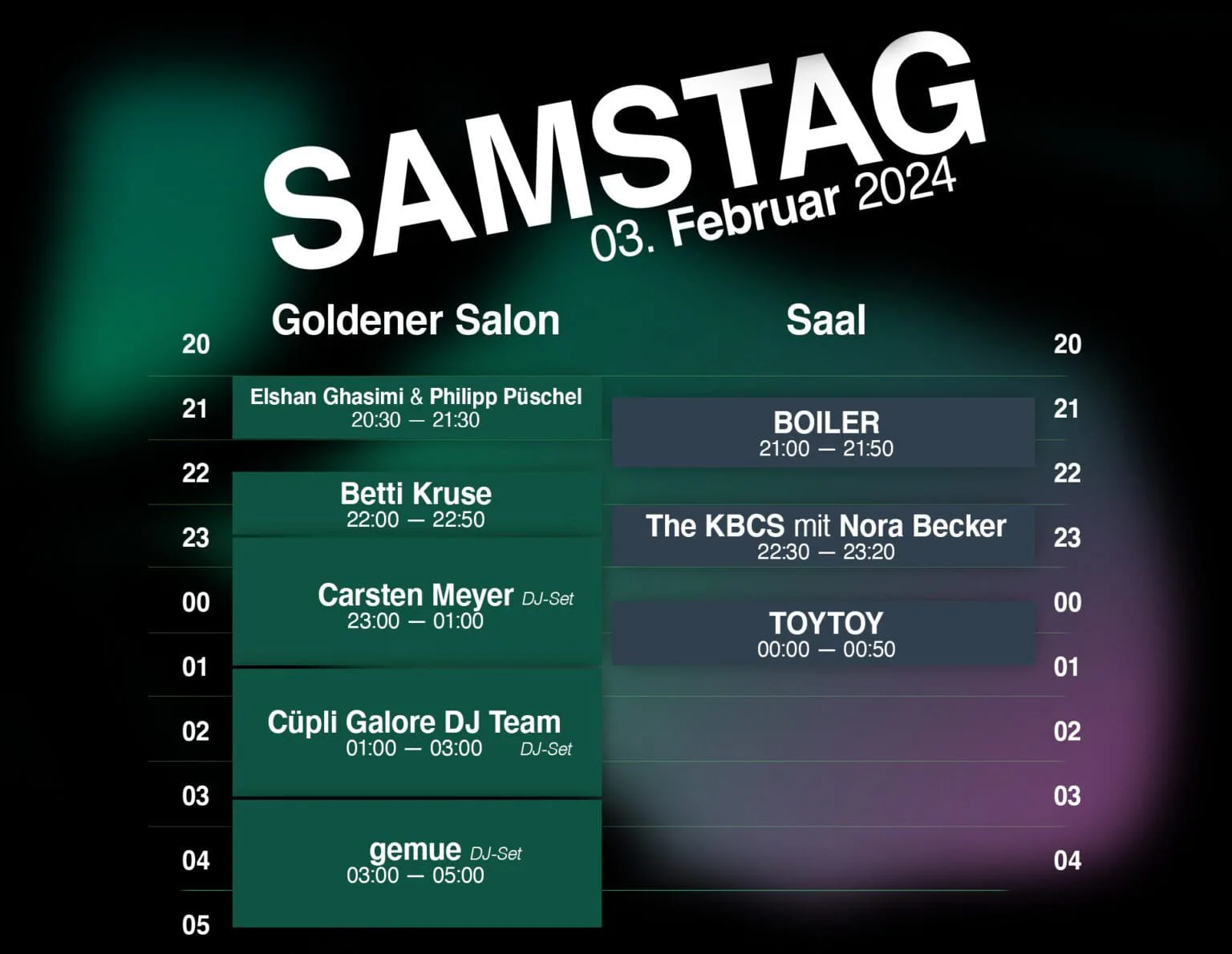
Programme board “Saturday, 3 February 2024” with the acts in the Goldener Salon and the Saal, including Elshan Ghasimi & Philipp Püschel

© 2024 feel.jazz festival

"Don't hammer a nail in the wall" – a ceremony to mark Brecht's birthday.

With Mariam Meetra (Afghanistan), Atefe Asadi (Iran), Yirgalem Fisseha Mebrahtu (Eritrea) and Sveta Ben (Belarus), music by Elshan Ghasimi (Iran/Germany)

On Saturday, 10 February, at 3 pm, a special ceremony will take place in the inner courtyard of the Brecht House in Berlin and the adjacent Dorotheenstädtischer Friedhof cemetery. At a festive kick-off of the Brecht Days 2024, we will celebrate Bert Brecht's birthday with the Berlin public with music and readings by exiled poets. Admission is free!
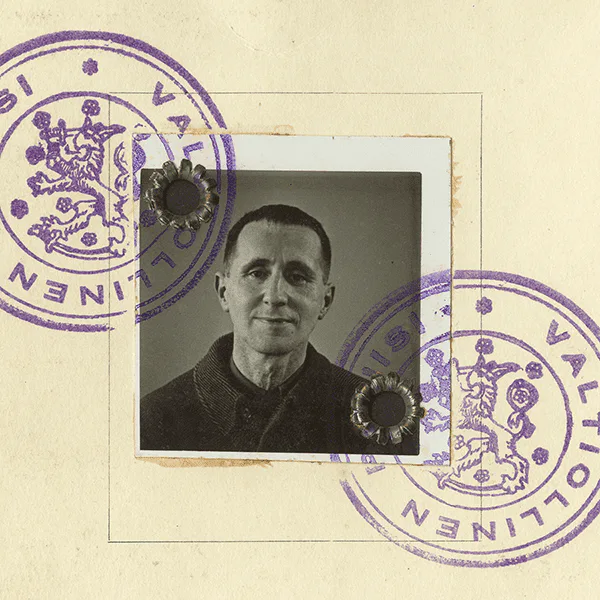
More information.

Brecht-Tage 2024: a passport photo of Bertolt Brecht with Finnish stamps, Akademie der Künste Berlin

© Akademie der Künste, Berlin, Bertolt-Brecht-Archiv 2967

We look forward to welcoming you to our events in the new year, engaging in dialogue on-site, celebrating our cultures, and immersing ourselves more deeply in them.


Your Julian Malte Hatem Schindele
Posted by Joseph in News

Circular 5 | 23 Premiere in Berlin “Nahfernost“

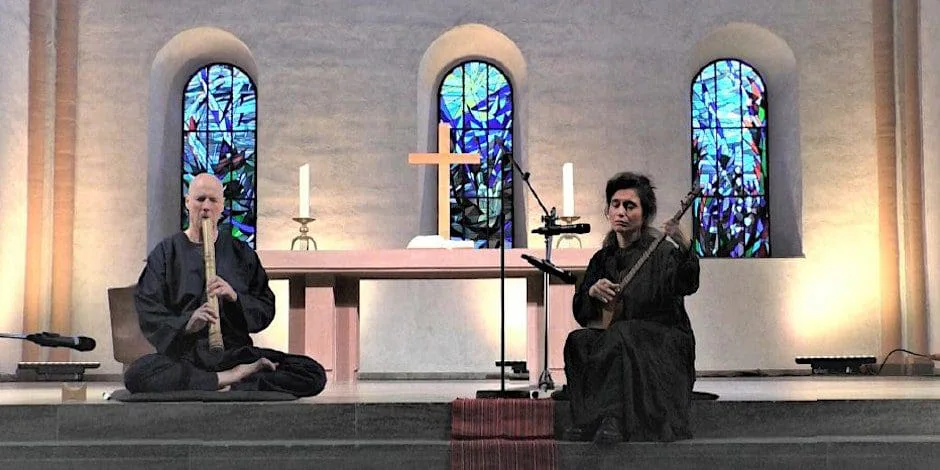
Elshan Ghasimi with her tar and a musician with a shakuhachi in front of a church altar with stained-glass windows

Dear reader,

The artistic encounter between the Persian setar master and composer Elshan Ghasimi and the flautist and shakuhachi player from Bremen Dieter Weische gave rise to the wish to deepen the dialogue between these two traditions. The desire became an idea, and they developed a new format: classical Persian and Japanese music merged into “Nahfernost” [Nearfareast].

Elshan Ghasimi has written new compositions for the concert on the 30th of September in the salon of the Schwartzsche Villa. They are based on classical literature-based pieces for the individual instruments. Together, she and Dieter Weische explore the relationship between rhythmic poetry and music and playfully show the similarities and differences between these ancient musical traditions.


Concert date
30th of September 2023
8 pm (admission from 7:30 pm, box office from 7 pm)
Tickets 18 € | red. 12 €
Buy tickets: https://www.eventbrite.de/e/elshan-ghasimi-dieter-weische-nahfernost-tickets-707449308927


Venue
Large Salon Schwartzsche Villa
Grunewaldstrasse 55
12165 Berlin


More information
www.elshanghasimi.com | https://www.floete-shakuhachi-bremen.de
© Photo Dieter Weische

Posted by Joseph in News

Zirkular-Circular 4 | 23 Concerts & Exhibitions

A pale blue monochrome field, like a clear sky

Michal Martychowiec Blue #5 (Upper Lusatia)
(January 2016) chromogenic prints, 175x220 cm

Dear friends of summer,

I would like to draw your attention to several program items by the artists of Bublitz Infrastructure.

Firstly, Elshan Ghasimi is performing at the Kampnagel International Summer Festival in Hamburg on the 24th of August. On the 26th and 27th of August, she can be seen and, above all, heard at the Dara String Festival in Berlin at the Theater im Delphi. Further information and tickets can be found on the respective websites (links marked in green, as always).

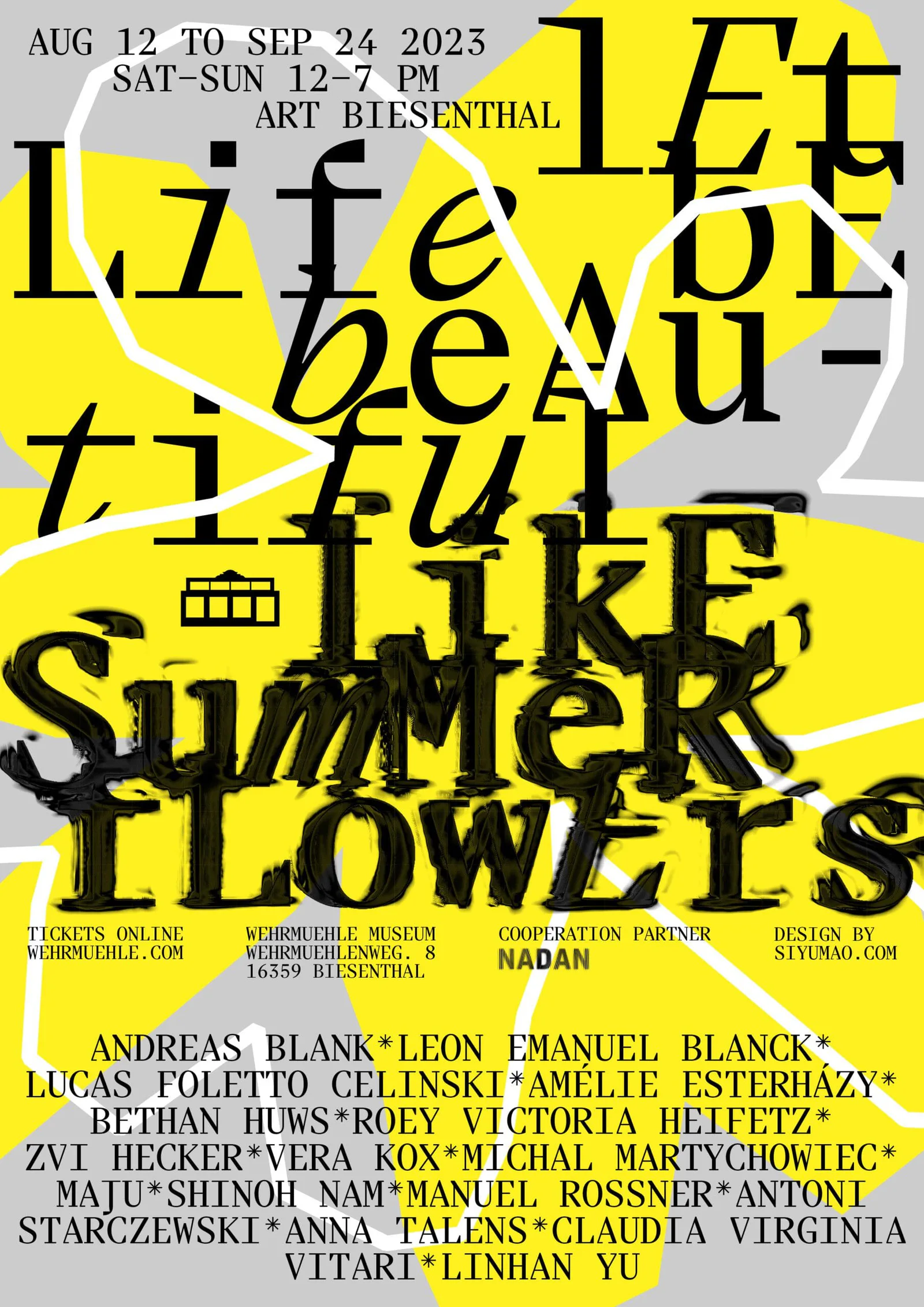
In the unique atmosphere of the Wehrmuehle Museum at Art Biesenthal, Michal Martychowiec will be showing his, it must be said, heavenly photographs from the Blue series. These are accompanied, framed, and interrogated by a series of his Promethean neon works. The group exhibition with the optimistic as well as correct title Let Life be Beautiful like Summer Flowers was curated by Dan Chen and runs until the 24th of September. An unconditional recommendation to all Berliners for a lovely late summer excursion.

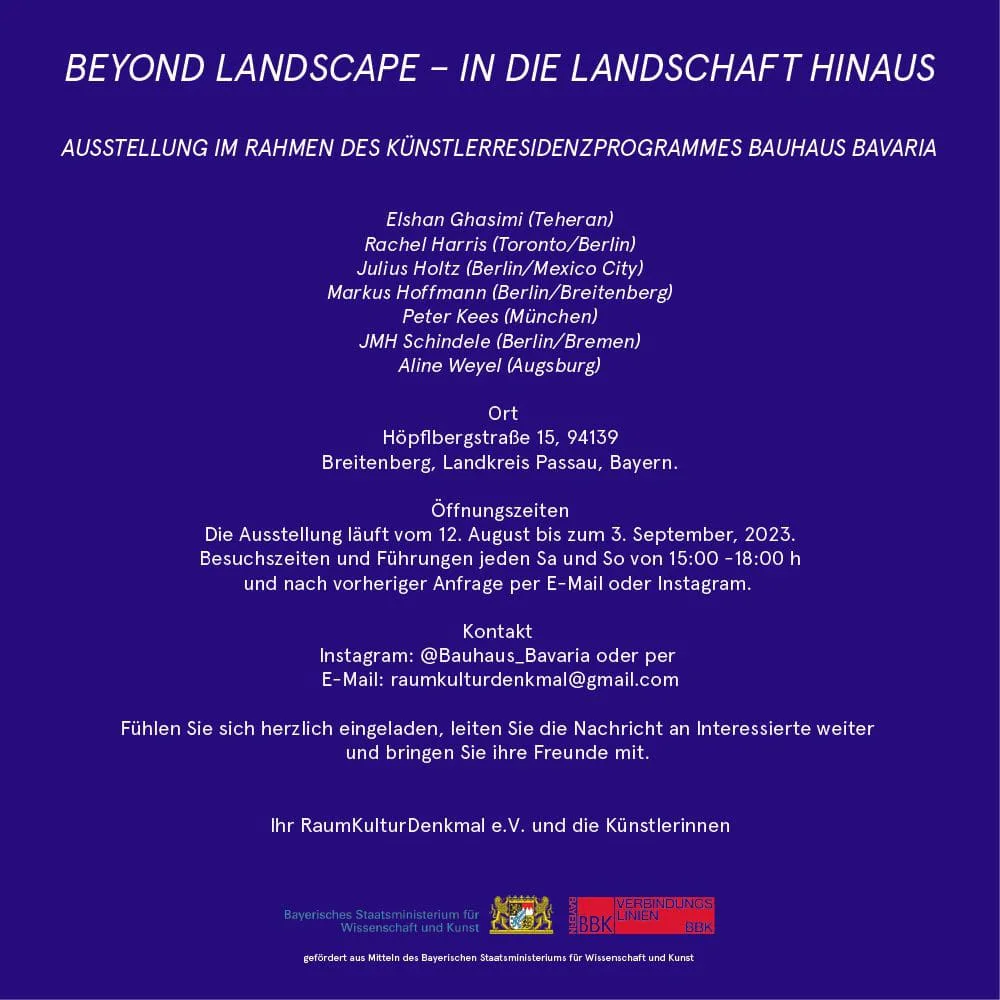
If you happen to be in the south, southeast of the republic, I recommend a visit to the Höpfgut in Breitenberg, Lower Bavaria. This summer, the BAUHAUS BAVARIA artists' summer residence took place here for the first time. As a result, the exhibition Beyond Landscape can be visited until the 3rd of September. The exhibition features works created on-site by Elshan Ghasimi, Rachel Harris, Julius Holtz, Markus Hoffmann, Peter Kees, JMH Schindele and Aline Weyel.

Wishing you the best,
JMH Schindele

Invitation “Beyond Landscape – In die Landschaft hinaus”, exhibition of the Bauhaus Bavaria artist residency in Breitenberg, 12 August to 3 September 2023, white text on blue
Poster “Let life be beautiful like summer flowers”, Art Biesenthal, 12 August to 24 September 2023, yellow flower shapes and a list of artists
A deep blue monochrome field

Michal Martychowiec Blue #3 (Pomerania)
(November 2013) chromogenic prints, 175x220 cm

Posted by Joseph in News

Premiere of the music film “The Reinterpretation of the Radīf | Dastgāh-e Shur”

Dear friends and those interested in the Renaissance of ancient cultures,

The Radīf is the repertoire of Persian classical music. This collection of melodies, divided into twelve modular systems, called the Dastgāhs and Avâz’, has been passed down orally for thousands of years.

The continuity and vitality of this tradition has always depended on its transmission from one generation to the next. However, since its initial transcription into Western notation, and the first sound recordings in the mid-20th century, an actual renewal of the repertoire had never been attempted. As a result, this tradition has stagnated and is now in danger of collapsing due to a lack of young people.

In the autumn of 2022 (1401 in the Persian calendar), the Iranian composer, virtuoso and tar master Elshan Ghasimi premiered the first chapter of her reinterpretation of the Radīf according to Mirza Abdollah at the Bode-Museum in Berlin. She is thus the first female musician to dedicate herself to the systematic renewal of this classical tradition and intangible cultural heritage.

Filmmakers Stefan Stark and Pujan Shakupa (Stark & Shakupa) sat down with the artist and myself as artistic directors to "revive this old tradition with new images". The result is a musical film of extraordinary beauty, sensitivity and colour that you can find here: The Reinterpretation of the Radif | Dastgāh-e Shur.


On behalf of everyone involved, I wish you many refreshing summer days,

Julian Malte Hatem Schindele
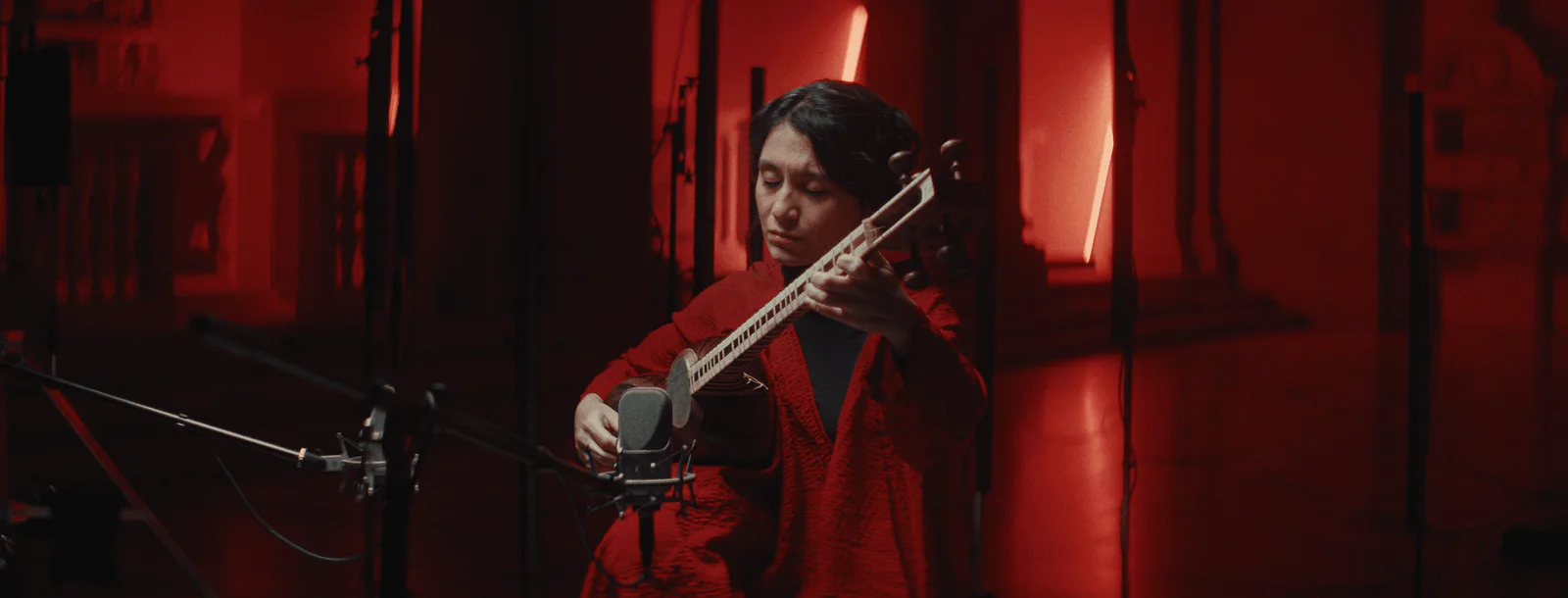
Elshan Ghasimi playing the tar in red light, film still from “The Reinterpretation of the Radīf”, 2023

© Stark & Shakupa

Posted by Joseph in News

Artist talk and concert: Markus Hoffmann in conversation with Elshan Ghasimi

Dear friends of all genders,

I am pleased to invite you to the concert and artist talk between the sculptor Markus Hoffmann and the composer and virtuoso Elshan Ghasimi on the 31st of March, starting at 7 pm.

The venue and occasion for the meeting is the exhibition Solstice and Clock: Humanity's exit from self-incurred immaturity by Markus Hoffmann, curated by Annalena Amthor at the HOTO Gallery in Berlin Kreuzberg. Hoffmann - full of intuition and with a sense for bridging cultural distances - invited Ghasimi to interpret his 2017 film Elephant Forest, shot in the nuclear exclusion zone of Chernobyl, in the language of classical Persian music.

We look forward to seeing you!

Julian Malte Hatem Schindele


BRIEF INFORMATION

Date: 31st of March
Doors: 7 pm / Start: 8 pm
Ticket price: 12 Euro (box office only)
Venue: HOTO Gallery, Bergmannstr 109, 10961 Berlin


WEBSITE MARKUS HOFFMANN
WEBSITE ELSHAN GHASIMI

Photo credit: Milos Djuric

Film still Elephant Forest, 2017

Elephant Forest
2017
4k 2-Kanal Film
116min
Cinematography Cornelius Diemer, Ton Julius Holtz

The 2-channel film which was shot in the Nuclear Exclusion Zone of Chernobyl completes the exhibition and brings the fundamental questions around mankind’s emergence from his self-imposed immaturity back into mind. Shot in 2017, today, in light of the war unleashed by the Russian Federation on the territory of Ukraine, the film shows seismic sensitivity and recurring actuality as a fundamental quality of Markus Hoffmann’s artworks.

At the film's beginning, the artist is rubbing two coconut shells against each other while seemingly capturing or attempting to control the flames and sparks like a sorcerer indicating an omen or losing control of what the viewer is about to see. By looking directly at the viewer, he moreover projects their implication. The camera is leading us down a seemingly never-ending corridor, like a gateway to the yet unknown omen. The hallway is almost completely deserted, only the sudden appearance of abstract sounds and a few men in lab coats indicate an eerie element; this corridor inside the nuclear plant is the "golden corridor" that hundreds of people used to escape when the nuclear disaster occurred in 1986.

During the film, the artist approaches the site in a series of performative acts, such as the gambling-like ritual in which Hoffmann kneels in the middle of a circle and moves 3 coconuts, uncovering a fossil at the end, addressing that the fossils of the future are the radioactive substances we produce. The circle is also found in the modification of the Japanese flag, which symbolises the sun. According to astrophysical definition, the sun is a nuclear reactor and can therefore be read as its symbol. In the film, the human hand lets the flag fall to the ground like the sun falling to earth, an analogy of the Chernobyl catastrophe; what happens when this nuclear power slips out of our hands?

Other sequences portray the decommissioned power plant itself as well as the seemingly peaceful landscape, in which only particular posed objects like white coconuts hint at the fact that something is off. The coconut - a recurring object in Hoffmann’s practice – has lost its function due to the radiation that made it inedible and turned into somewhat of a scientific bio-indicator. The coconut with its 3 marks can furthermore be read as a representation of the Hindu trinity of Brahma (the creator), Vishnu (the protector) and Mahesh (the destroyer).

This triangle symbolizes the necessary energy and the catastrophic ramifications of the disaster at the nuclear power plant in Chernobyl. Switching between colour and black-and-white scenes, sound and silence, the film fathoms the place and time itself. Changing between film and video sculpture, the work shows the importance of when something is rather than merely what it is.

Photo credit: Milos Djuric

Sponsored by

Logos of Barkin' Kitchen, C/O Berlin and Bark Communication
Posted by Joseph in News

Goethe in exile and Radīf at home

Dear friends of high cultures,

On the 4th of March at 8:30 pm, Elshan Ghasimi will play at the finishing event of the highly recommended series and exhibition Tracing Movement(s) in Uncertain Times. This is organised by the Goethe in Exile programme of the Goethe Institute. It is nomadic and currently located at ACUD MACHT NEU in Berlin-Mitte.

The series focuses on Iran, our dear Persia, today, tomorrow and yesterday, reflecting and shaping the zeitgeist itself. The concert will be preceded by a reading of poetry by the Iranian poet SAID at 7 pm. Admission to both events is free - thanks to Goethe. Please come early if you are interested.


More information

More on the SAID reading

More on the concert by Elshan Ghasimi

Price: Free admission


ACUD Studio
Veteranenstraße 21
10119 Berlin

Video still (concert)
© Heiko Volkmer & Lou van Houtte // worksaboutcontact

Radīf at home

I am also very pleased to announce, that the concert recording of the world premiere of Elshan Ghasimi's Radīf interpretation on the 10th of November 2022 is available online. Enjoy the concert by clicking on the video above, or click on the video below, if you want to first listen to the introductory and contextualising speeches by the British music critic Michael Church and the director of the Museum für Islamische Kunst (Museum of Islamic Art), Stefan Weber.

The first chapter of the systematic and comprehensive reinterpretation of the system of Persian art music has begun. As artistic director of the project and of Bublitz, my thanks go first and foremost to the composer and musician Elshan Ghasimi, who has set out to preserve and renew an important piece of world culture. Special thanks also go to the Museum für Islamische Kunst (Museum of Islamic Art) as a partner, the Bode Museum and the State Institute for Music Research as hosts, as well as to all the sponsors and our wonderful audience.


With warmest regards,

Julian Malte Hatem Schindele
Video still (speeches)
© Heiko Volkmer & Lou van Houtte // worksaboutcontact

The concert series is a Bublitz project and a production in cooperation with the Museum für Islamische Kunst (Museum of Islamic Art) at the Pergamon Museum of the State Museums in Berlin.

Logos of Bublitz and the Museum für Islamische Kunst of the Staatliche Museen zu Berlin

The concert series is supported by:

Logos of the Hauptstadtkulturfonds and the Friends of the Museum für Islamische Kunst
Posted by Joseph in News