
Bublitz is happy to announce the conferment of an research scholarship of the berlin senate to our team. The funding will be used for the comprehensive historical investigation and research of the Estate of El Arbi Bouqdib.


Bublitz is happy to announce the conferment of an research scholarship of the berlin senate to our team. The funding will be used for the comprehensive historical investigation and research of the Estate of El Arbi Bouqdib.


Bublitz mourns El Arbi Bouqdib (1947 - 2016) who died on the 12th of march surrounded by his family.
Bublitz is proud to announce El Arbi Bouqdib as a new member of the exclusiv-cosmogonic circle of Thesaurós.
When El Arbi Bouqdib passed away on 12th March 2016, he left behind countless secrets, as yet immeasurable in their significance.
Bouqdib devoted himself to a broad spectrum of different disciplines. He worked as a mathematician to solve Fermat's last theorem, wrote computer programmes, occupied himself with the physics of thinking, attempted to approach palmistry in a scientific way, worked on magical squares and even developed a theory of colours, amongst others. He was still working right up to his last hours, decrypting the great numerical code he considered to be in the Quran.
Bouqdib was born in Morocco in 1947. He came from a Sufi family and, from his early childhood onwards, was as fascinated by science as by its border phenomena. During an interview I conducted with him for "Bublitz" in August last year, he urged me to examine all his statements and set them in "the light of the sciences and falsification".
He moved to Europe at 19, living, studying and working in different towns and countries. During these young years, he could undoubtedly have been described as flamboyant. He wrote poems and stories, went motorbike racing, was a scientist and worked alongside Albert Hoffmann, the LSD researcher and chemist. However, during the last thirty years, which he spent in Germany, he became increasingly isolationistic and reclusive.
Bublitz has been granted access to a large, unordered collection of different materials. This consists of notebooks, photos, around a dozen books written by Bouqdib, but never published, hard drives and further documents.
The task now facing us is the archiving of these and, in dialogue with the family, the development of an appropriate form of presentation to convey the person, and in particular the work, of a scientist, researcher and mystic, but also, from the perspective of art, a meticulous Outsider artist. For this reason, the planned series of exhibitions on El Arbi Bouqdib will take place under the focus of Thesaurós.

August 2015, Julian Malte Schindele interviewing El Arbi Bouqdib.

This is reminiscent of the first exhibition that was accompanied by Bublitz, "What is a psychochromatic artist?" at Sprechsaal, located in Berlin-Mitte's Marienstraße. While this served as a retrospective on Manero's painterly oeuvre produced over recent years in isolation, with Ausscharre z we now witness the integration of some of these paintings into a larger work context as well as two or three islands from the Book of Death.
The islands are the refuges of the Gods, in his own words: "They go onto the islands to sojourn there". For otherwise, they would be everywhere - whereas I prefer to imagine them as symbolically centered psychic energies accompanying us, looking out for us, embodying potentials. For H201415M they are theatrical plays. Roles embodying personifications of our own comportment as human beings. The spheres: Gods, unaging as are eyes.
Before Chronos, the Oceanid Clymene is exposed to Uranus's whims, Nox, in the second Dichtungsgraphie, is dwelling on the threshold of Plutonium's gates. Both protogenoi are resting inside the blackness of a landscape. Surrounded by rocks who are observers. Through the presentation, the familiar is rendered strange and thus flees the possible gaze. Might still touch because of that. This (Hilarion Manero insists) is by no means about the Uncanny.
Quite the contrary, it is about the Magical. And the Possible.
This is why the works on view may be described as moralist pieces. Fortunately, this would be too reductive, and shall therefore remain undetermined. For the mentioned figures would encounter radiant objects: "We have to decide ourselves". Only obliquely mentioned in this exhibition, Power serves as the essayist's central point of reference. How all is exercising power.
Conscious, unconscious, without consciousness. H201415M's prime attachment figure these days: Charlie Chaplin.
The second complex forms an erotic ensemble: Representing the female principle inside the exhibition, a group of dryads has gathered by a creek.
Ausscharre des z consists of the reflections of a mythically inclined contemporary, bound together in two and a half acts. The general topic is the historical involvement of our time - and the way in which we man it.
Julian Malte Schindele
Good day. We're happy you're interested in our newsletter.
If you want, you can leave a physical address, along with your email address. In this case, we will send you surprise materials and invitations to exhibitions and events, from time to time.
So now the plan is fixed! Who would have expected that suddenly everything would be moving so fast?? Elshan Ghasimi made a suggestion, I gratefully accepted: She wants to set 38 objects from the estate of El Arbi Bouqdib into music. She wants to translate them into her own subjective and beautiful language of Classical Persian Music. In dialogue with uncertain pasts.
The objects/souvenirs/relics – how should I call these memorial stones? – will be ’staged‘ by Michal Martychowiec. The objects, their symbolic qualities form a polyphonic chorus that speaks of Bouqdib’s life. As a curator working with such diverse artists as a Persian musician and Martychowiec, an intellectual interrogator of 20th-century art, it is my concern to bring these different modes, possibilities and qualities into a common form.
For this, however, we need a new concept … The idea of the concert exhibition just popped into my head. After all, Ghasimi is giving concerts and is composing for objects. So, Concert-Exhibitions. Ephemeral and permanent …
Yes, it’s a huge question how a life can (and should!) be told. And I am happy (and a bit relieved even) that this long story of Bouqdib, his life, his time, his person and his work begin with music. After all, what could be freer as an approach? Almost like a dance and very volatile.
Our concern is the poetic reconstruction of the past. Truth and Fiction (Dichtung und Wahrheit) like good old Goethe said.
I am very happy to supervise and curate this project!
März 2018 (1397/1439 a.H.“)
T. +49 30 83031251
E. moderation@bublitz.org
You can reach us by phone from Monday to Friday from 10:00 to 18:00.
postal deliveries to:
Bublitz GmbH (gemeinnützig)
Bamberger Straße 18
10779 Berlin
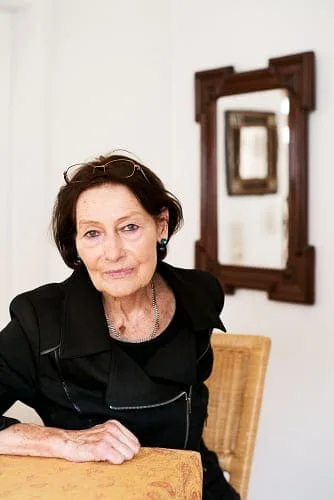
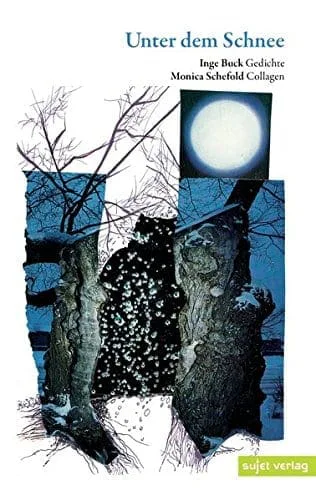
Inge Buck & Elshan Ghasimi: „Was bleibt“
Berührt und inspiriert von dem zweisprachigen Gedichtband „Unter dem Schnee“ der Lyrikerin Inge Buck, übertragen ins Persische von Madjid Mohit, hat die iranische Musikerin und Komponistin Elshan Ghasimi eigene Kompositionen geschaffen. Die poetische Bilderwelt, die Rhythmen und Metaphern hat sie auf dem persischen Saiteninstrument Tar in eine kongeniale musikalische Sprache übertragen.
Ein poetischer Dialog zwischen Lyrik und Musik, zwischen Orient und Okzident, zwischen den Gedichten von Inge Buck und den musikalischen Interpretationen von Elshan Ghasimi: „Die Töne kommen zu mir, ganz natürlich wachsen sie, wenn ich die Gedichte lese.“
Ein Bogen zwischen den Kulturen wird gespannt. Im Dialog und in der Stille zwischen persischer Musik und deutschsprachigem Text entstehen vor dem inneren Auge der Hörer aus Zeilen und Tönen Welten: über Stadtlandschaften und Natur, Jahreszeiten und Lebenszeit, über Vergessen und Erinnern, über Krieg, Exil und Flüchtlingsheim, über die Sprache der Bücher und die Aufbewahrung von Verlorenem in einem Gedicht.
Elshan Ghasimi und Inge Buck, zwei Künstlerinnen aus unterschiedlichen Kulturen, Sprachen und Generationen begegnen sich in ihrem Zusammenspiel: die Texte öffnen sich zur Musik, die Musik zu den Texten.
Konzert-Lesung am 30. August 2018 in Bremen
Beginn 19 Uhr
Buchhandlung Leuwer | Am Wall 171 | 28195 Bremen
Konzert-Lesung am 3. September 2018 in Berlin
Beginn 20 Uhr
Lettrétage | Mehringdamm 61 | 10961 Berlin